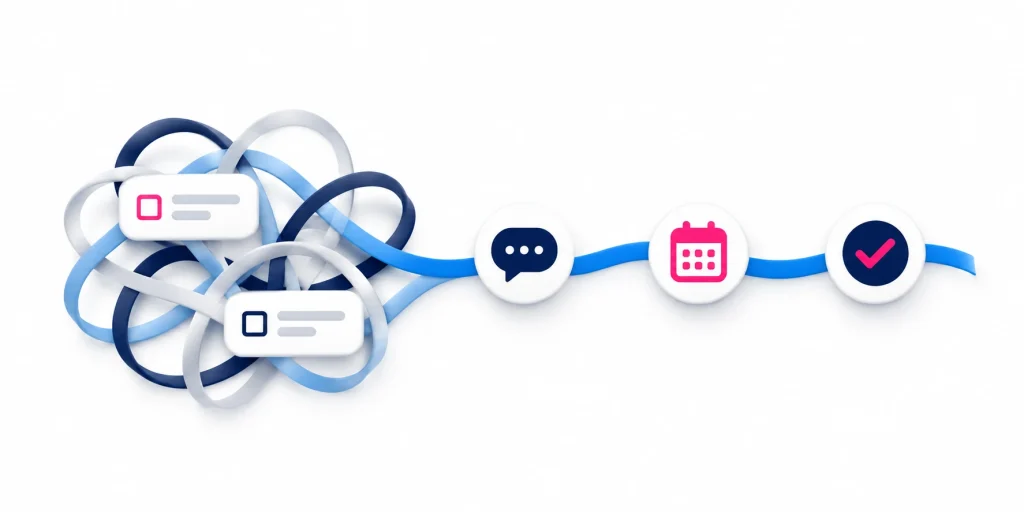
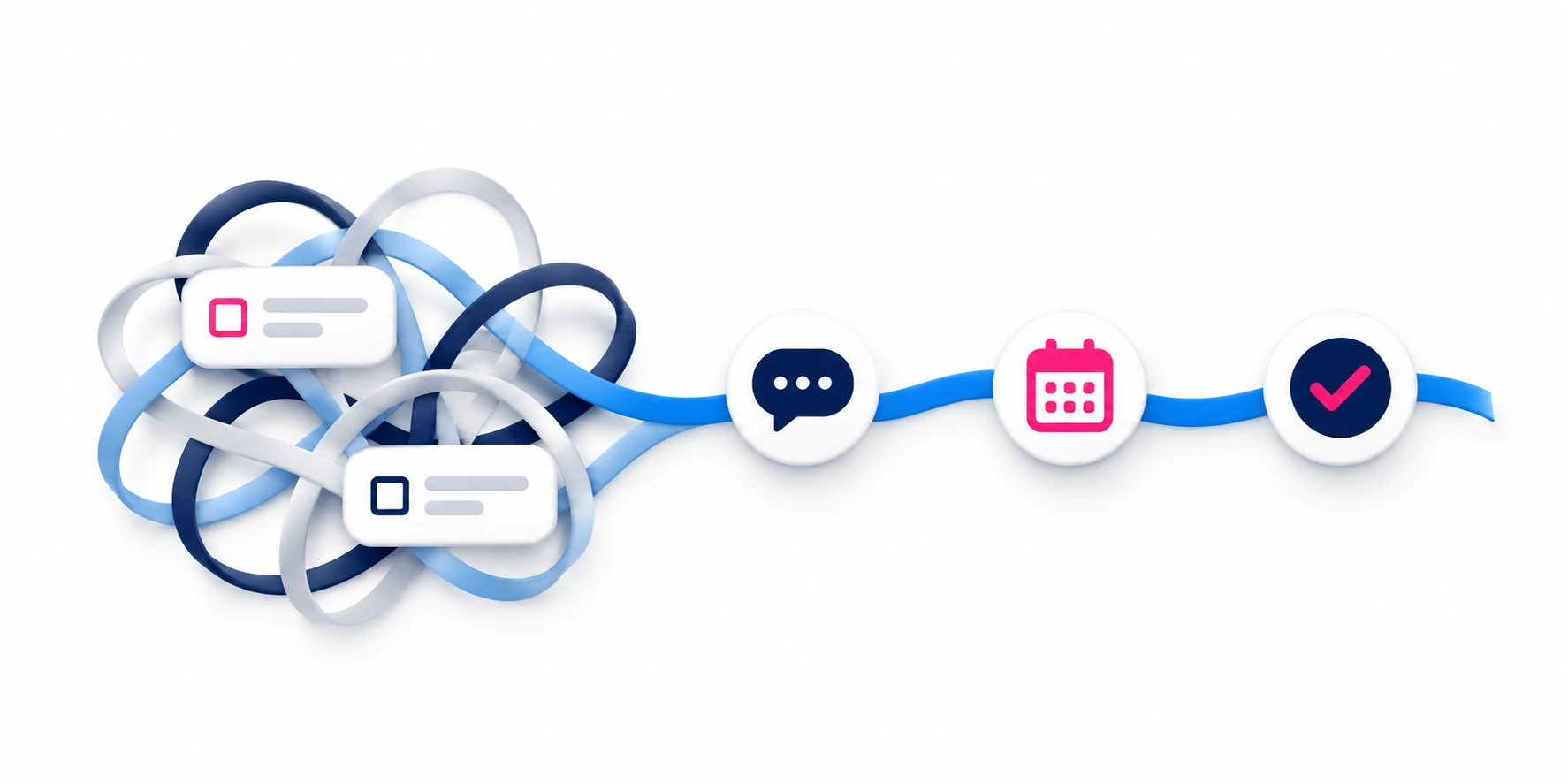
Closing deals, following up enquiries and keeping customer information up to date all compete for your sales team’s attention. Unnecessary administration can make that work harder.
A simpler sales process helps people understand which opportunities need attention and what to do next. Activity-based selling supports this by focusing on practical actions that move a conversation forward, while still measuring the results.
Three common sales process problems
1. Focusing on the wrong things
More leads and a larger pipeline do not automatically mean more business. A busy team can spend considerable time on opportunities that are unlikely to progress, while promising enquiries wait for a response.
Your sales process should help people assess fit, understand the customer’s needs and prioritise the next useful action.
That might mean arranging a discovery call, confirming a requirement or following up a proposal. Each activity should have a clear purpose, owner and timeframe.
2. The team is stretched
Complicated processes create additional work. If salespeople need to enter the same information in several places or complete fields they do not understand, keeping the CRM updated becomes a chore.
Review what you ask people to record and why. Keep the information needed for customer conversations, handovers and reporting, and remove unnecessary steps.
A useful process should help the team manage its work while giving managers visibility into progress.
3. The strategy keeps changing
Regularly changing priorities, tools or reporting requirements can make it difficult for a sales team to build consistent habits.
Agree on who you are targeting, how opportunities will be qualified and what each pipeline stage means. Make sure the team understands the process before adding further complexity.
Review the approach when evidence suggests a change is needed, allowing enough time to understand what is working.
How activity-based selling can help
You cannot control whether a customer buys, but you can manage how you prepare, respond and follow up.
Activity-based selling focuses on the actions that support a buying decision. These could include:
Responding to a new enquiry.
Holding a discovery conversation.
Confirming the customer’s requirements.
Preparing a relevant proposal.
Following up at an agreed time.
Recording a clear next step.
For example, an opportunity marked “Proposal sent” tells you where it sits. Adding “Call the customer on Thursday to discuss their questions” makes the next action clear.
The aim is to complete useful activities that help both your team and the customer make progress. Review the outcomes to check that those activities are effective.
Keep your measures simple and useful
Choose a small set of measures that helps you understand pipeline health and where support is needed.
Useful measures include:
Active opportunities: How many genuine opportunities are being worked on?
Average deal value: What is the typical value of an opportunity?
Win rate: What proportion of closed opportunities are won?
Sales cycle length: How long does it typically take to close a deal?
Alongside these outcomes, review activities such as overdue follow-ups or opportunities without a next step.
Agree on how each measure is calculated so reporting stays consistent. Use the information to investigate problems and coach the team, rather than simply asking for higher numbers.
Focus on leads that fit your business
Look at your existing customers to understand where your business provides the most value.
Consider their needs, the problems you solve and whether your services are a suitable fit. Use those insights to develop practical qualification questions.
Timing matters too. A suitable prospect who is not ready to proceed may need an agreed future follow-up rather than continued attention in the active pipeline.
Give each opportunity an appropriate next step: progress it, nurture it, revisit it later or close it out with a recorded reason.
Automate repetitive administration
Your CRM may be able to reduce routine work through reminders, task creation, enquiry assignment and connected information.
Start with a repetitive task that follows clear rules. For example, a new website enquiry could create a CRM record, notify the responsible person and schedule a follow-up task.
Available automation depends on your software, subscription and integrations. Test the setup, monitor exceptions and keep personal judgement involved where the customer’s situation requires it.
Start with one practical improvement
You do not need to redesign the entire sales process at once.
Choose a recurring problem, such as missed follow-ups or unclear opportunity ownership. Agree on a simpler way to handle it, configure the CRM to support it and review the results with the team.
A clear process gives salespeople a better view of what needs attention. It also helps managers identify where opportunities are getting stuck and provide specific support.
How Hatchit can help
Hatchit helps New Zealand organisations improve CRM processes, configuration and automation.
If your team is spending too much time on administration or struggling to manage follow-ups, we can help review your current setup and identify practical improvements.